


Serial to IP Converter Solutions
Connecting Serial Devices to Modern Networks
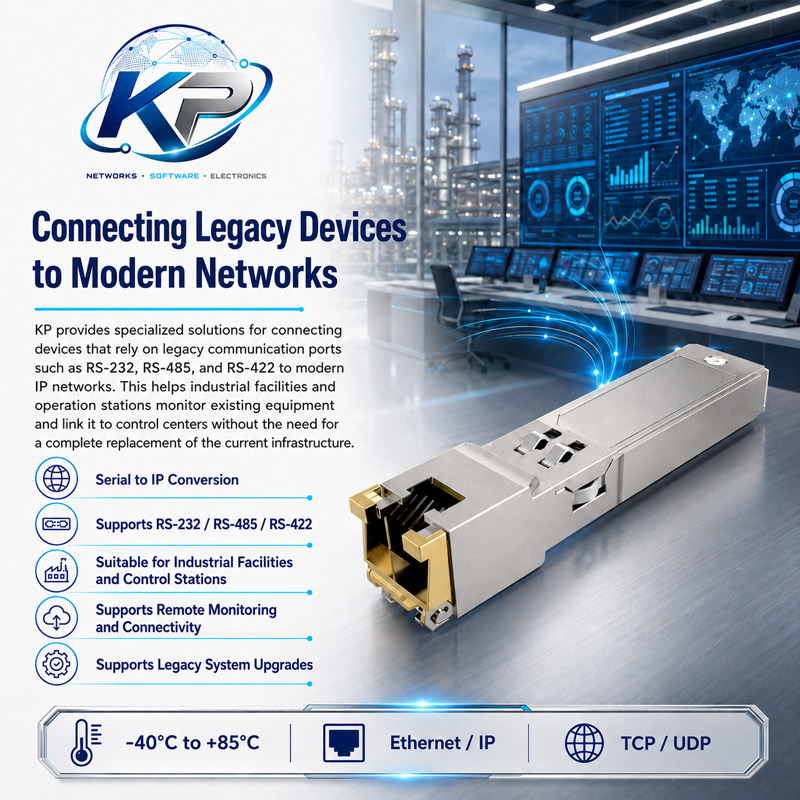
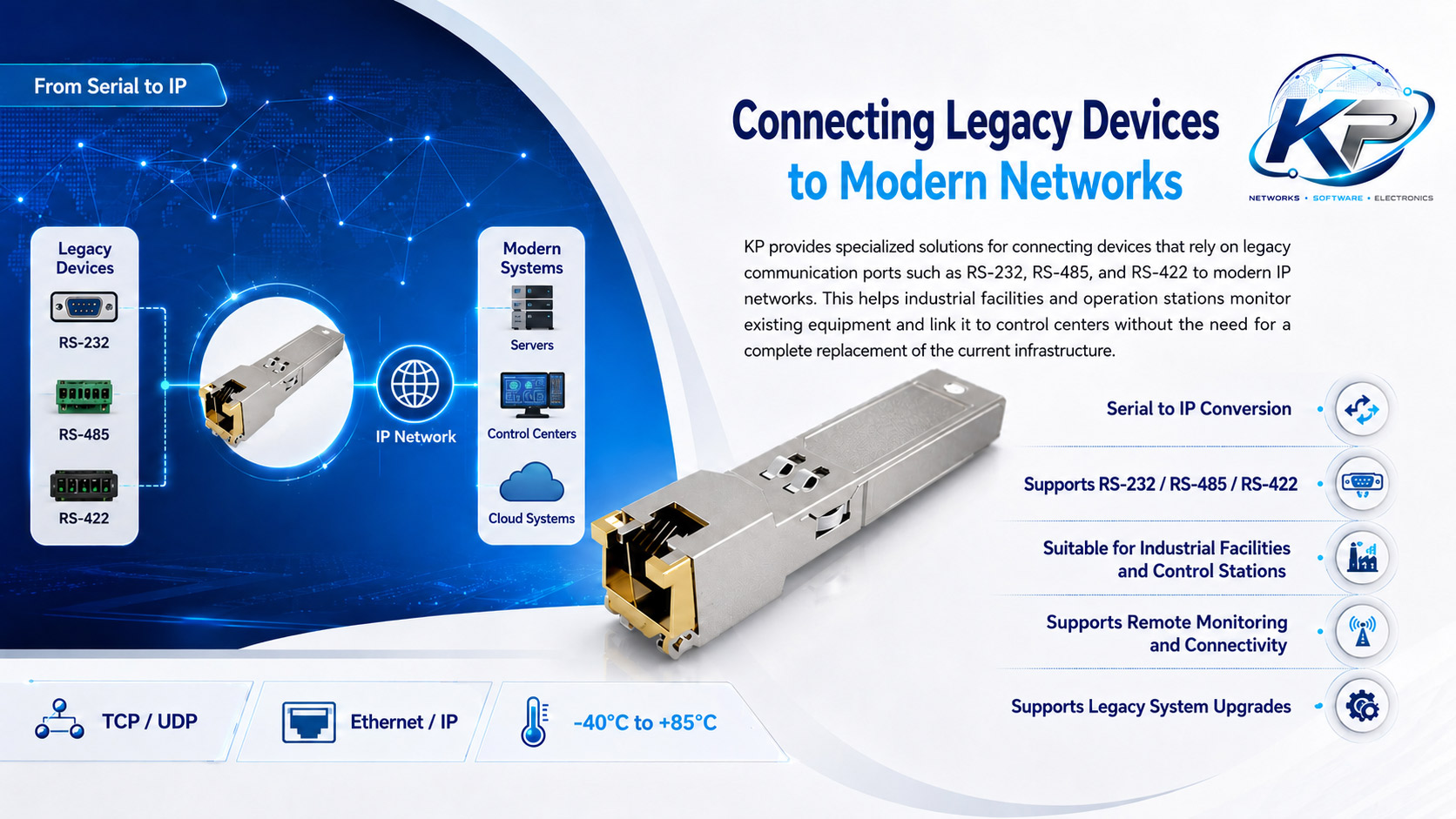
Many industrial and operational facilities need to continue using existing devices that operate through legacy communication interfaces such as RS-232, RS-485, and RS-422. This is where the Serial to IP Converter provides a practical solution, helping connect legacy devices to modern Ethernet / IP networks without the need for a full replacement of the existing systems.
This solution enables serial communication to be converted into network connectivity, allowing devices, equipment, and control units to be linked with modern networks. It also supports easier monitoring, better management, and smoother data transfer between different operating points inside the facility.
What Is the SFP Serial to IP Converter?
The SFP Serial to IP Converter is a compact SFP module that works as a technical bridge between serial communication interfaces such as RS-232, RS-485, and RS-422 and modern Ethernet / IP networks. Instead of relying only on traditional direct connections, this solution helps transfer serial device data through a modern network, making management and monitoring more flexible within an advanced technical environment.
Why Do Facilities Need This Solution?
In many industrial sites, operation stations, control rooms, measuring systems, monitoring equipment, and legacy devices, some systems still operate efficiently but do not support modern network connectivity directly. Replacing these devices completely may be costly or unnecessary, especially when they still perform their function well.
This solution helps achieve an important balance between keeping existing devices and improving the way they connect. It gives facilities the opportunity to upgrade their technical infrastructure and connect legacy systems to modern networks without major changes or long operational downtime.
Main Uses of the Solution
The SFP Serial to IP Converter can be used in several applications inside facilities, including:
• Connecting RS-232 / RS-485 / RS-422 devices over IP networks.
• Transferring serial device data to monitoring or control systems.
• Upgrading legacy communication systems inside industrial sites.
• Supporting COM Port Extender applications.
• Supporting Virtual Serial Ports.
• Connecting control devices and equipment inside operation rooms.
• Improving connectivity between legacy systems and modern networks.
• Supporting projects that need stable data transfer between remote points inside the facility.
Suitable for Industrial and Operational Environments
This type of solution is designed for environments that require stable and reliable connectivity. It is suitable for sites that depend on operating equipment, control systems, measuring devices, monitoring units, or legacy equipment that needs better network integration.
It also suits locations that need to upgrade connectivity without fully changing the existing infrastructure, such as industrial facilities, technical facilities, control rooms, energy sites, monitoring systems, and operation centers that rely on data connectivity between multiple devices.
Multi-Interface Support
The solution supports more than one serial communication interface, giving it flexibility when dealing with different types of devices. Supported interfaces include:
- RS-232
- RS-485
- RS-422
This flexibility allows it to be used with multiple devices across different environments, especially in facilities that include more than one type of communication equipment or legacy operating systems.
Ethernet and IP Connectivity
The core idea of the solution is to convert data from a Serial interface into an IP / Ethernet network. This allows legacy device data to move through modern network infrastructure, instead of keeping these devices isolated or limited to traditional communication ranges.
This connectivity helps improve operational flexibility and allows devices to be integrated within a larger system that includes networks, control rooms, monitoring systems, and management platforms.
UDP and TCP Protocol Support
The product supports data transmission using UDP and TCP protocols, giving greater flexibility in choosing the communication method based on the nature of the application.
UDP can be used in applications that require data broadcasting or communication between multiple points, while TCP is more suitable for applications that require a defined connection between two endpoints in a more organized way. This variety makes the solution suitable for different operating scenarios inside facilities.
Multiple Operating Modes
The solution provides more than one operating mode depending on the required connection type, including:
Point-To-Point
For connecting two specific devices or points through the network, allowing data to be sent and received directly between them.
Point-To-MultiPoint
For handling more than one connection point, which is suitable for some applications that require data distribution or receiving data from multiple endpoints.
Broadcast Mode
For sending data to several points inside the network in specific applications that require data distribution or broadcasting.
COM Server / Virtual Serial Port
For applications that need to extend a Serial port or operate it virtually through the network.
Easy Management and Configuration
The product can be managed and configured through multiple interfaces, such as:
- Web Interface
- Telnet
- SSH
This helps technical teams adjust settings, review status, and modify the operating method based on project needs. It also supports easier integration within different technical environments, whether the project requires simple configuration or more advanced technical management.
Improved Management Security
The product provides features that help protect settings and prevent unwanted changes. This includes the ability to secure access to management interfaces with a password, in addition to operating modes that support management control, such as normal mode, management blocking mode, and factory reset mode.
These features are important for sites that need to reduce unauthorized changes to settings or protect system configuration after setup and operation have been completed.
Low Power Consumption
The product features low power consumption, making it suitable for installation in operating environments that need compact and efficient solutions without adding a heavy load on network devices or electrical infrastructure. This feature is especially important for integrated solutions that operate inside SFP ports and require stable performance with limited power usage.
Suitable for Harsh Environments
The product supports an industrial operating temperature range from -40°C to +85°C, making it suitable for many environments that may be exposed to high or low temperatures. This adds value in industrial sites, operation rooms, or environments that require devices capable of handling tougher conditions than traditional office environments.
Flexible Installation Inside SFP Ports
Being an SFP module makes it a compact solution that is easy to integrate into devices that support SFP ports. It also supports Hot-Pluggable functionality, which helps make installation or replacement easier and less complex compared to larger traditional solutions.
This design makes it suitable for projects that need to add Serial to IP conversion functionality into an existing network infrastructure in a practical and integrated way.
Better Monitoring and Diagnostics
The product supports Digital Diagnostic Monitoring, in addition to a temperature sensor and voltage measurement. These features help monitor product status and diagnose some operating elements, making it easier for the technical team to follow performance and detect any indicators that may require review.
Metal Housing to Reduce Interference
The product comes with a full metal housing that helps reduce electromagnetic interference, which is important in environments that include operating equipment, multiple cables, or electrical sources that may affect signal quality. A suitable housing supports performance stability and increases the product’s suitability for technical and industrial applications.
Firmware Upgrade Capability
The product supports firmware upgrade capability, helping improve performance or add future enhancements according to what the manufacturer provides. This feature is important for technical solutions that require continuity and better compatibility with different operating environments.
Where Can This Solution Be Used?
The SFP Serial to IP Converter can be used in:
- Industrial facilities.
- Control and monitoring rooms.
- Operation stations.
- Measurement and control systems.
- Energy sites and technical facilities.
- Legacy systems that rely on RS-232 / RS-485 / RS-422.
- Projects that need to connect legacy devices to modern networks.
- COM Server and Virtual Serial Port applications.
- Sites that need to transfer Serial data over IP.
What Value Does It Provide to the Facility?
This solution provides real value for facilities that already have existing devices and do not want to replace them completely. It helps modernize the communication method, reduce dependence on traditional connectivity, improve data management, and simplify the integration of legacy systems with modern network infrastructure.
It also supports future expansion, as devices that used to operate separately can be connected to the network and managed more flexibly, serving the needs of operation, monitoring, and control.
How Can KP Help Implement This Solution?
KP helps study the current operating environment, understand the type of devices in use, define the suitable connection method, and select the settings that match the project requirements. This solution can also be integrated within a larger infrastructure that includes networks, fiber optics, control rooms, monitoring systems, or smart solutions.
We focus on delivering a practical solution that matches the nature of each facility, whether the requirement is to connect one device, upgrade an existing system, or integrate several operating points within a more stable modern network.
Summary
The SFP Serial to IP Converter is a practical solution that helps facilities connect legacy devices operating through RS-232 / RS-485 / RS-422 interfaces to modern IP networks. It is suitable for sites that need to upgrade connectivity without fully replacing existing systems, while supporting multiple protocols, flexible management, low power consumption, and strong tolerance for industrial environments.
This solution gives facilities a better way to benefit from their existing devices and connect them within a modern technical infrastructure that helps improve operation, monitoring, and control.
Request a Technical Consultation